#PARTICIPATORY SYSTEMS MAPPING
Journal : Energy Research & Social Science
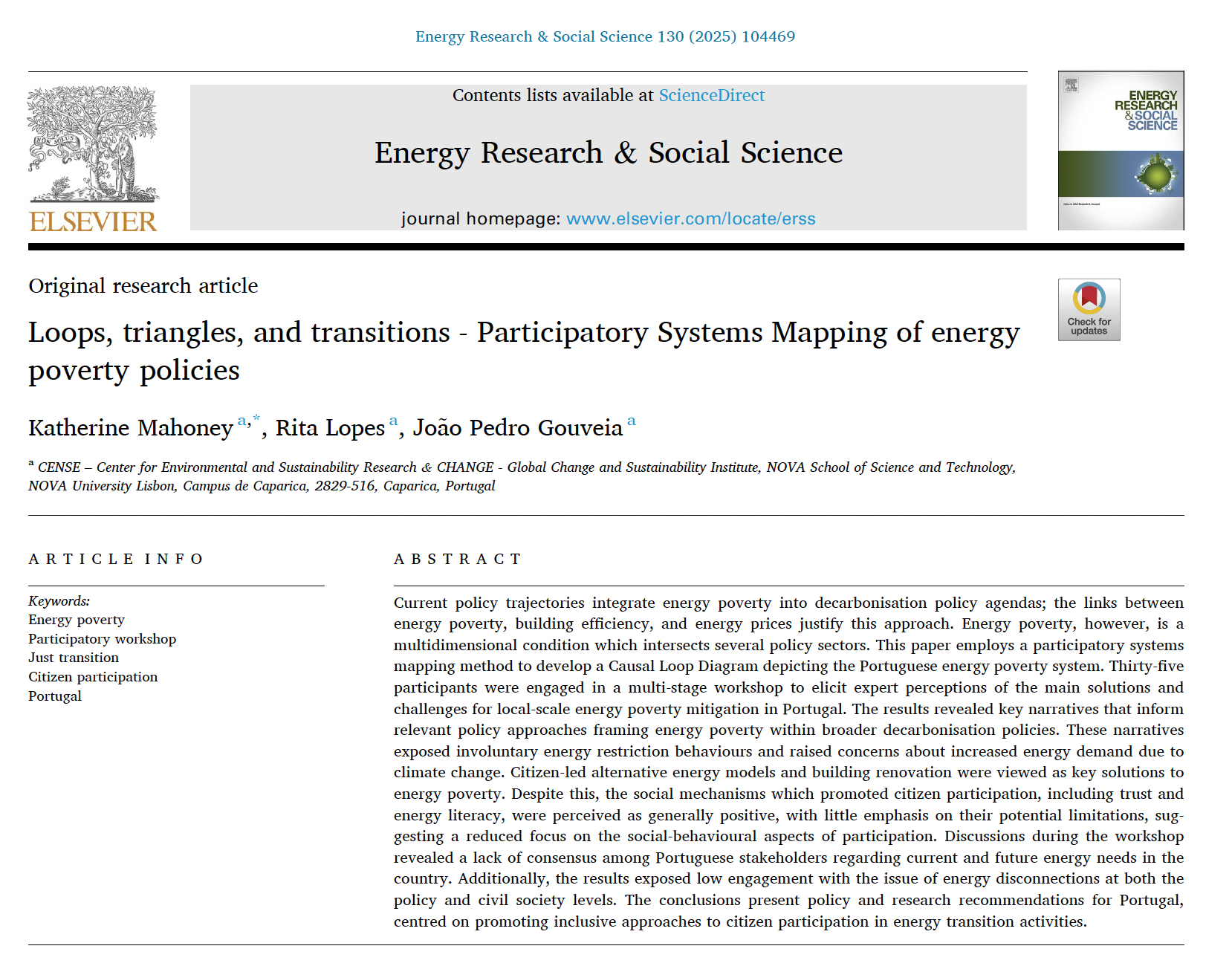
Current policy trajectories integrate energy poverty into decarbonisation policy agendas; the links between energy poverty, building efficiency, and energy prices justify this approach. Energy poverty, however, is a multidimensional condition which intersects several policy sectors. This paper employs a participatory systems mapping method to develop a Causal Loop Diagram depicting the Portuguese energy poverty system. Thirty-five participants were engaged in a multi-stage workshop to elicit expert perceptions of the main solutions and challenges for local-scale energy poverty mitigation in Portugal. The results revealed key narratives that inform relevant policy approaches framing energy poverty within broader decarbonisation policies. These narratives exposed involuntary energy restriction behaviours and raised concerns about increased energy demand due to climate change. Citizen-led alternative energy models and building renovation were viewed as key solutions to energy poverty. Despite this, the social mechanisms which promoted citizen participation, including trust and energy literacy, were perceived as generally positive, with little emphasis on their potential limitations, suggesting a reduced focus on the social-behavioural aspects of participation. Discussions during the workshop revealed a lack of consensus among Portuguese stakeholders regarding current and future energy needs in the country. Additionally, the results exposed low engagement with the issue of energy disconnections at both the policy and civil society levels. The conclusions present policy and research recommendations for Portugal, centred on promoting inclusive approaches to citizen participation in energy transition activities.
Full publication here.
 2025_Mahoney et al_PSMapping of EP.pdf