João Pedro Gouveia
Lab Leader at NOVA University of Lisbon

Dr. João Pedro Gouveia holds a PhD in Climate Change and Sustainable Development Policies from NOVA School of Science and Technology of NOVA University of Lisbon (FCT-NOVA, PT). He is a Principal Researcher and Integrated Member at the Center for Environmental and Sustainability Research (CENSE) and coordinator of the Energy and Climate area. At CENSE, he created and leads a team working on energy-efficiency solutions & funding schemes, as well as energy-poverty mitigation (Firefly Energy Lab). He is the coordinator of the CHANGE - Global Change and Sustainability Institute thematic line on "Promoting a circular and carbon-neutral economy".
He is a lecturer at NOVA University of Lisbon (FCT, SBE, FCSH) in the fields of climate change mitigation and adaptation, as well as sustainable and resilient cities. He is one of the founders of Regenerative Intelligence (RegenIntel), a global advisory consultancy based in the US.
Dr. Gouveia's expertise extends beyond academia, as he is the principal investigator of multiple national and international projects, policy support studies, and consultancy work on buildings, energy efficiency, energy poverty, sustainable cities, and climate change. He is the overall coordinatoor of the LIFE EP-MED (2026-2029). His practical application of research is further evidenced by his role, since 2021, on the scientific coordination team of EPAH - EU Energy Poverty Advisory Hub for DG Energy of the European Commission, and by his former position on the Management Committee of the EU COST Action on Energy Poverty (ENGAGER) (2017-2020).
He supervises multiple PhD and MSc theses. He is a recognised international expert in his research area, serving as an advisor on a wide range of EU projects and participating in various academic MSc and PhD juries both nationally and abroad.. João has authored over 60 peer-reviewed articles in high-impact-factor international journals, with more than 4,900 citations (H-index of 33). He has also contributed to presentations at over 150 national and international conferences and events, serving as an invited speaker or keynote speaker to more than 100.
He is a member of the editorial board of Discover Global Society (Springer Nature), PLOS Climate, and an Associate Editor of Frontiers in Sustainable Cities.
He was a Senior Research Fellow for energy systems at Project Drawdown (USA) (2016-2020), founder and former Board Member of DERA - Drawdown Europe Research Association (2019-2022), and APEEN - Portuguese Association for Energy Economics (2015), where he is currently part of the board as vice president. Between 2018 and 2021, he served on the CENSE Management Board, with responsibility for the cross-cutting area of "Impact on Society and Technology Transfer." Since January 2025, he has been a member of the CENSE Management Board, responsible for Research and Scientific Production. He is one of the elected representatives of the Researchers on the Environmental Science and Engineering Department Council at FCT-NOVA (2020-...).
Before pursuing his PhD, he completed his master's degree in Environmental Engineering at the Faculty of Sciences and Technology, NOVA University of Lisbon, where he also earned his bachelor's degree in Environmental Engineering Sciences.
The oneness IAT as a new assessment tool for sustainability research [2026]
Energy performance assessment of the multifamily building stock: The potential of renovation for energy demand reduction, decarbonisation and energy poverty mitigation [2026]
Opinion - Supply Shocks Expose Reversion Risk in India’s Clean Cooking [2026]
Methodology for the identification of EU regions with higher vulnerability to severe energy poverty [2026]
Exploratory analysis of self-reported housing and comfort, indoor environmental quality, and energy use for identifying hidden energy poverty in residential buildings [2026]
Fundos Verdes Cascais_Municipal Energy Efficiency Funding Scheme [2023-2027]
Support the development of an energy efficiency support scheme for familiesLOCATEE - LOCal Authorities to Tackle Energy povErty in private multi-apartment buildings [LIFE] [2024-2027]
LOCATEE's overarching goal is to support local municipalities in addressing energy poverty through the renovation of private multiapartment buildings for vulnerable residents.MARS - Mitigation, Adaptation and Resilience among Students: towards a paradigm shift in home energy [2025-2027]
This is an international, transdisciplinary research project on youth, energy behaviour, and climate change adaptation in cities. It aims to assess and build the capacity of young students (of legal age, university or vocational) to mitigate and adapt to urban climate change through more efficient, lower-emission, less fossil-dependent energy use. The rationale is that young people are disproportionately burdened by energy costs relative to their income, yet hold real potential to shift the status quo through peer-to-peer influence on future generations and professionals. The project covers eight Latin American countries (Mexico, Ecuador, Bolivia, Costa Rica, Cuba, Panama, Colombia, Chile) and southern Europe (Spain, Portugal), regions chosen for their climate diversity, energy vulnerability, and exposure to extreme climate impacts.Energy Poverty Vulnerability Mapping for Portugal - Portuguese Energy Poverty Observatory (ONPE-PT) [2025-2027]
This project develops a national energy poverty index and maps energy poverty across Portugal at the district and municipality levels, covering mainland Portugal, the Azores, and Madeira. The work also discusses the indicators defined in the ELPPE (Estratégia de Longo Prazo para o Combate à Pobreza Energética, Portugal's national long-term strategy against energy poverty), spanning primary indicators (inability to keep the home adequately warm, poor energy performance of dwellings, damp/mould/rot problems, thermal discomfort in summer, and high energy expenditure burden) and contextual indicators (poverty risk, utility debt, disconnections, self-supply from renewables, and energy literacy).ENTRACK Empowering local and regional authorities to design clean Energy TRAnsition plans through Capacity and Knowledge (LIFE) [2023-2026]
Empowering local and regional authorities is pivotal in achieving the EU's ambitious climate neutrality goals by 2050. The #ENTRACK project recognizes the challenges faced by local policymakers, especially in rural areas, where a lack of knowledge and technical capacity often hinders socially just energy planning.SHELTER- Sustainable Habitability and Energy for Living and Teleworking: making Environments more Resilient [2025-2026]
The aim is to delve into the new challenges of housing and built environments concerning domestic energy use and indoor environmental quality (IEQ) that affect the population in inequity, vulnerability, health, and well-being. Specifically, daily tasks from living and newer ones, such as teleworking, boosted by the COVID-19 pandemic, are explored to determine their environmental, social, and economic impacts. This study has an exploratory nature, so two approaches are applied: 1) quantitative: we will analyze surveys, sharing previous and ongoing project insights from regions and other data-based analyses; 2) qualitative, we will explore individual/collective experiences from other techniques (interviews, focus groups, community sessions), using photos, either taken by participants (Photovoice technique or similar), or by Generative Artificial Intelligence (photo-elicitation). A mixed approach and transdisciplinary work contribute to shifts toward societal and environmental enhancement in the Climate Change context following SDGs.Apr
202410
POLICY CONFERENCE of the European Parliament’s and the Directorate General’s for Energy of the European Commission Energy Poverty Advisory Hub
Mar
202421
João Pedro Gouveia invited speaker to the kick-off meeting of the INTERREG EURO-MED project EnerCmed
Mar
202407
João Pedro Gouveia invited speaker at the European Energy Efficiency Conference 2024, Wels, Austria.
Mar
202405
EAPN Portugal - European Anti-Poverty Network series of webinars on Energy Poverty
Feb
202420
CENSE After Lunch Talk with Lilia Karpinska (Krakow University, Poland)
Feb
202420
Dr. Lilia Karpinska concludes her 3-week visit to Firefly Lab with a presentation on Energy poverty in Central and Eastern Europe
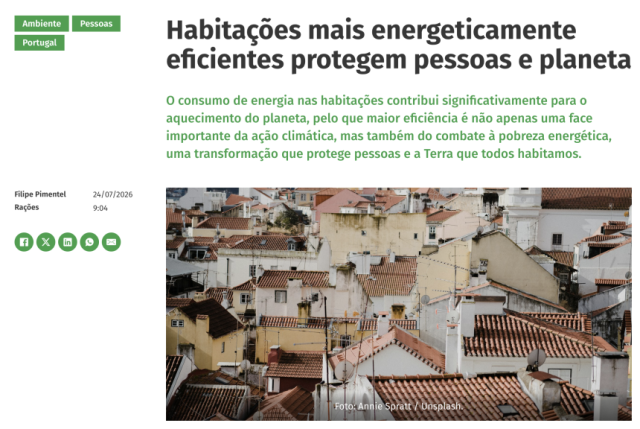
João Pedro Gouveia interviewed for the Green Savers Magazine on "More energy-efficient homes protecting people and the planet"
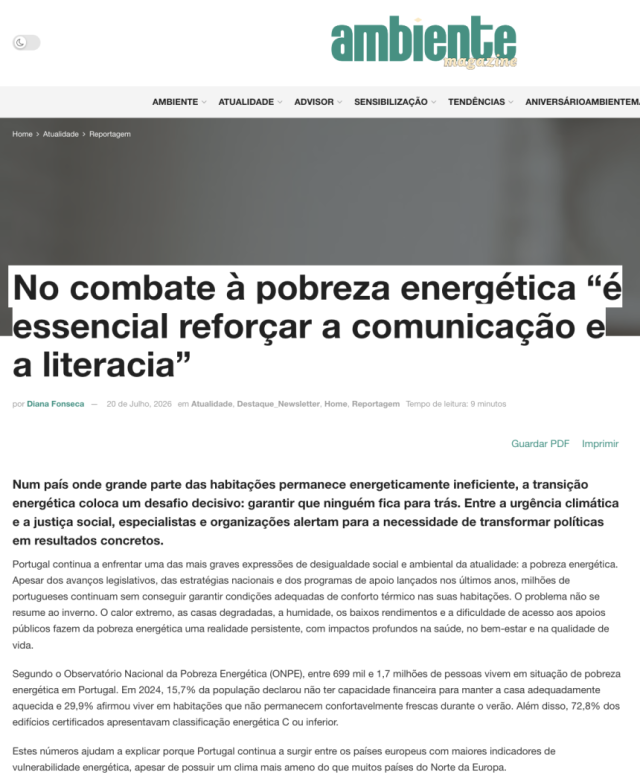
João Pedro Gouveia and Miguel Sequeira featured in the Ambiente magazine article "In the fight against energy poverty, it is essential to strengthen communication and literacy"

Pedro Palma and João Pedro Gouveia interviewed for EU LIFE LOCATEE project article
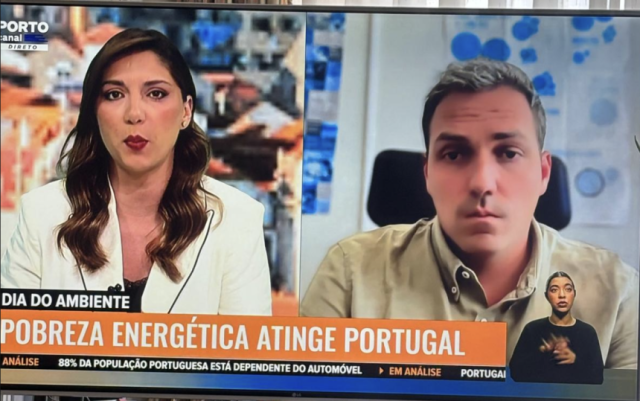
João Pedro Gouveia at Ordem do Dia for Porto Canal TV Channel
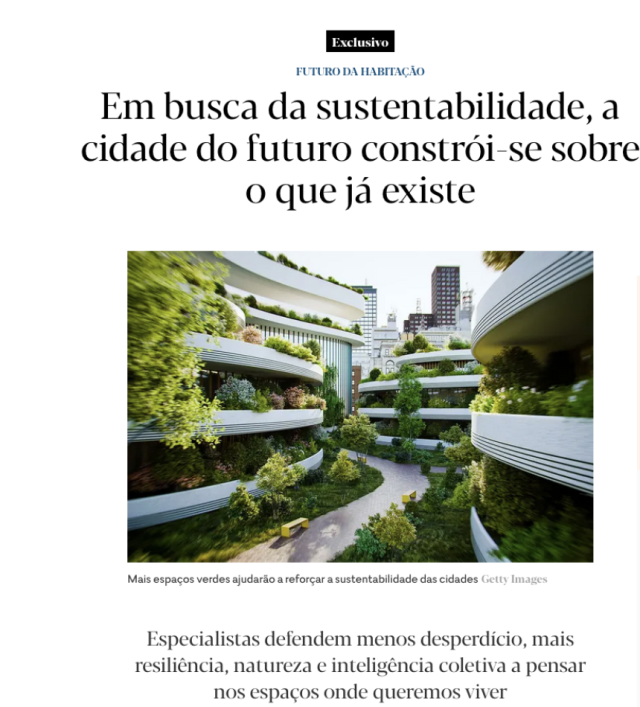
João Pedro Gouveia @ Expresso on Sustainable Future Cities
